

General principals of exhaust and makeup air:
- Use unconditioned makeup air if you can
- If the makeup air must be conditioned:
- Control the HVAC to deliver only the air needed, when it’s needed
- If practical, allow makeup air to provide useful heating or cooling to an adjacent space first, before being exhausted
- Condition makeup air only as needed, as needed for the space it is being delivered to
Industrial Exhaust
Look at minimizing the cost of makeup air, including using unconditioned makeup air dedicated to an exhaust load where possible. Many industrial buildings go negative from exhaust, especially in the winter:
- Air is pulled in through the path of least resistance in the perimeter, usually the loading docks
- Heaters waste energy to heat the air coming in
- Sometimes infiltration of outdoor air can cause occupant discomfort, and even humidity trouble or condensation if it occurs in an area that is sensitive to it
Many times, I have seen systems with major exhaust loads (such as welding stations) and no makeup air directed to the area they were in. Typically, there is actually very little makeup air sent by any mechanical systems in the facility, and instead exhaust fans suck a negative pressure on the building, and air simply leaks in through the paths of least resistance, often through the loading docks. This can leave loading areas freezing cold in the winter, with unit heaters running non-stop. In some case the lack of makeup air interferes with proper exhaust, resulting in poor indoor air quality as well.

FIGURE 11: RELIEF OF BUILDING NEGATIVE PRESSURE WITH UNCONDITIONED OUTDOOR AIR
Consider adding unconditioned outdoor air to relieve negative building pressure, to:
- Help the exhaust fans move air and therefore help them remove contaminants
- Reduce the negative pressure on the building and associated perimeter heat load in winter
- Relieve heat in areas of high heat gain.
- Potentially improve comfort in the areas where contaminants are being exhausted – sometimes even in the summer if the plant had no central AC
This may also improve comfort, as well as help prevent truck exhaust from being pulled into the building.
When evaluating how to supply relief air, consider the requirements of the processes that are exhausting air from the building.
- If the process is temperature-controlled (like a powder-coat oven) the process may have to make up the same energy that would otherwise be used to heat the relief air.
- If the process involves drying, unconditioned outdoor air could be cold but also very dry in the winter-time.
Care should be taken in doing this to avoid freezing, condensation, trouble with processes, and other problems.
Restaurants
Some simpler facilities like restaurants also have this issue. I’ve visited restaurants where cold outdoor air is pulled through the front door to make up for kitchen exhaust, while patrons huddled in their coats at the tables. That same cold outdoor air would probably improve comfort if it were ducted straight into the kitchen – it would relieve some of the heat from the cooking and equipment in that location, and people in that space would prefer it cooler anyway due to the high level of work they are doing.
Interlock makeup air with exhaust
A passive air duct still warrants an automatic damper that will stop the flow of air when it is not needed and prevent unwanted intrusion of outdoor air. And obviously any fan that delivers makeup air should also be interlocked with the exhaust, so that the two run and shut off together.
If conditioned air must be used for makeup
General principals apply to using conditioned air for makeup. In some cases the area where the exhaust load is has relatively minimal heating and cooling loads, often due to minimal exposure and limited internal heat gains. In this case, makeup air can be drawn passively from surrounding areas of the building, with the HVAC systems serving those surrounding areas set up to bring in a certain amount of makeup air. Lavatories are a good example of this type of area.
Toilet Exhaust
To avoid over-cooling a lavatory or using wasteful and expensive reheat:
- Deliver some makeup air to the surrounding space
- Put only exhaust in the lavatory, with a louvered or undercut door to allow the makeup air to come from the surrounding space.
Steven Taylor of ASHRAE wrote a great article about this:
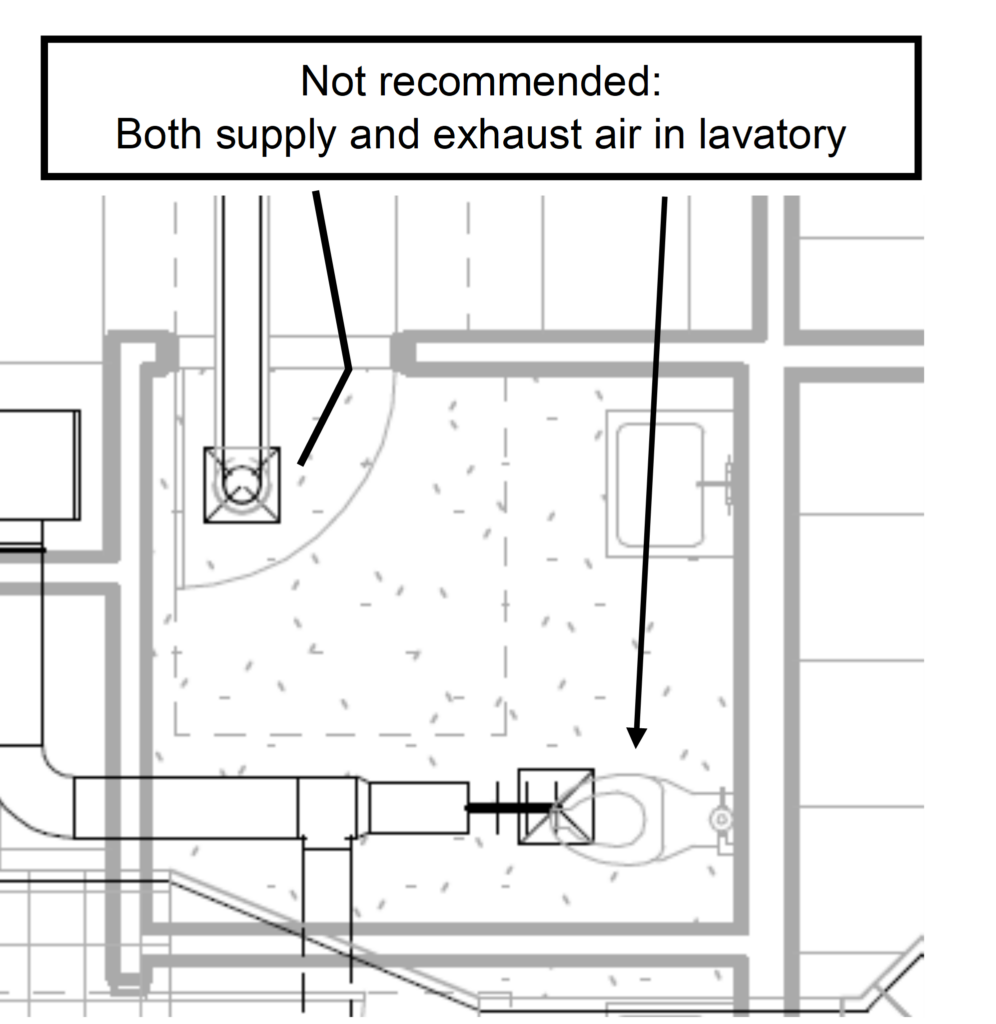
FIGURE 10: SUPPLY AIR REGISTER WITHIN A LAVATORY, NEXT TO TOILET EXHAUST
This is recommended because a lavatory is a place of limited heat gain and usually zero exposure, meaning VERY unlike a kitchen. As a result, and as long as exhaust is functioning correctly, the space will not overheat or overcool is it is only conditioned with air from surrounding spaces.
Deliver conditioned makeup air only when and where it is needed
There is clearly far more energy savings in controlling the makeup air to meet the exhaust load real-time if it must be heated, cooled and / or otherwise conditioned. If an air handler delivers a mix of outdoor air and makeup, it can be controlled to change the amount of makeup air as needed real-time. This can be done by modulating fan speed and / or air dampers. This is discussed more thoroughly in another post, to be published in the future.
Condition makeup air only as much as needed
If makeup air is delivered through a dedicated system (DOAS) then it is important to consider how much that air gets conditioned. Overheating of makeup air is a common waste of energy with a DOAS. This is discussed more thoroughly in another post, to be published in the future.